
Fragmented Landscapes
Generative Landscape | Personal Project | 2022
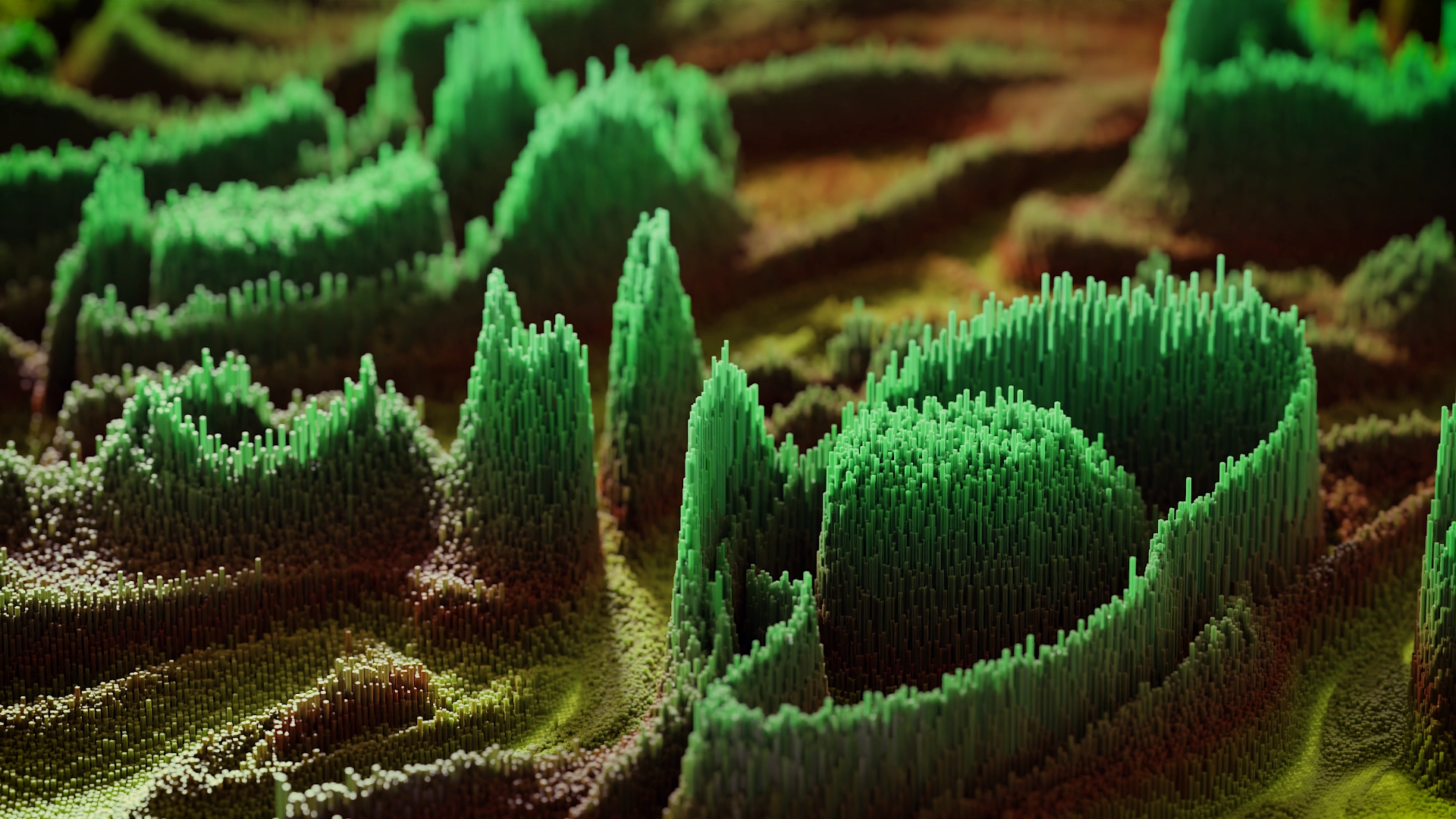
A vast landscape of cubes shapes abstract peaks and valleys. This piece explores how procedural generation can turn data into vivid, organic‑looking terrain influenced by underlying height and color data.
Process
My goal was to create a system for generating a geometric landscape environment that I could experiment with while learning Blender’s Geometry Nodes.
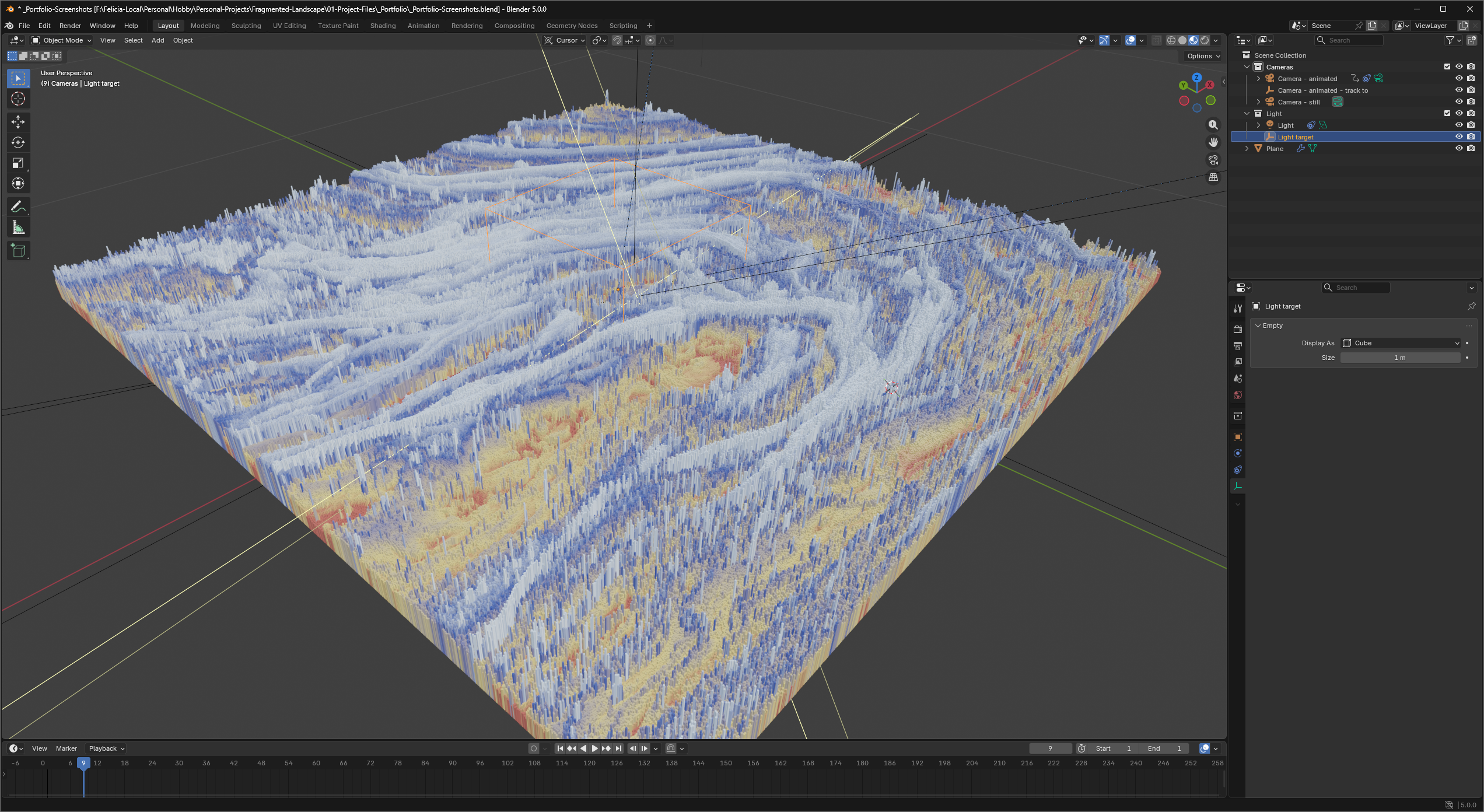
Terrain generation
The terrain is built from a grayscale image used as a height‑map. The darkness of each pixel drives the Z‑axis elevation of thousands of instanced cubes via Geometry Nodes. I also added a slight random rotation to every cube to break up the uniform grid.
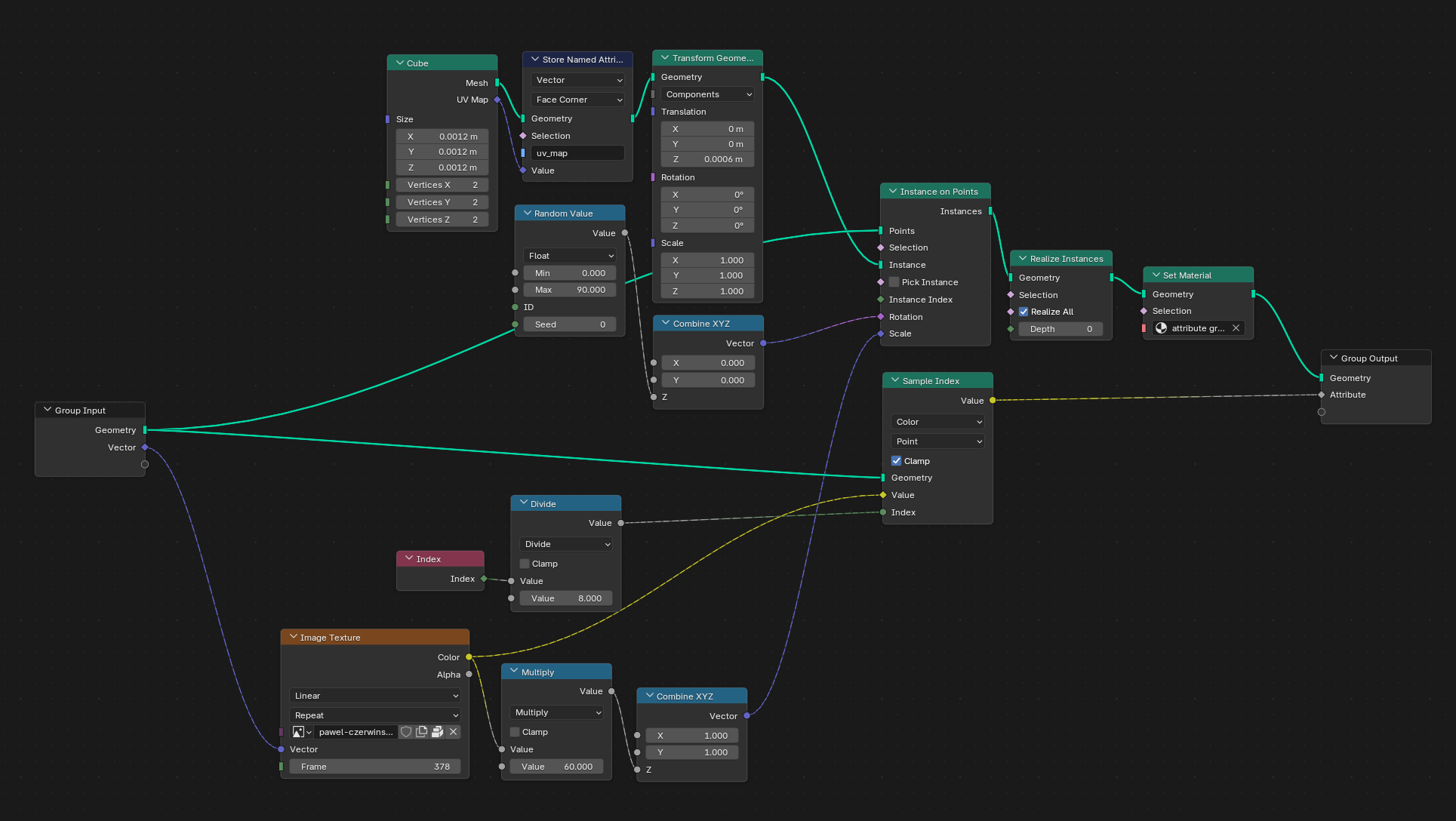
Geometry nodes
Shading
To colour the landscape, I passed the custom attributes (e.g., height and random seed) from the Geometry Nodes network into the shader graph, where they control the base colour, roughness, and other material properties.
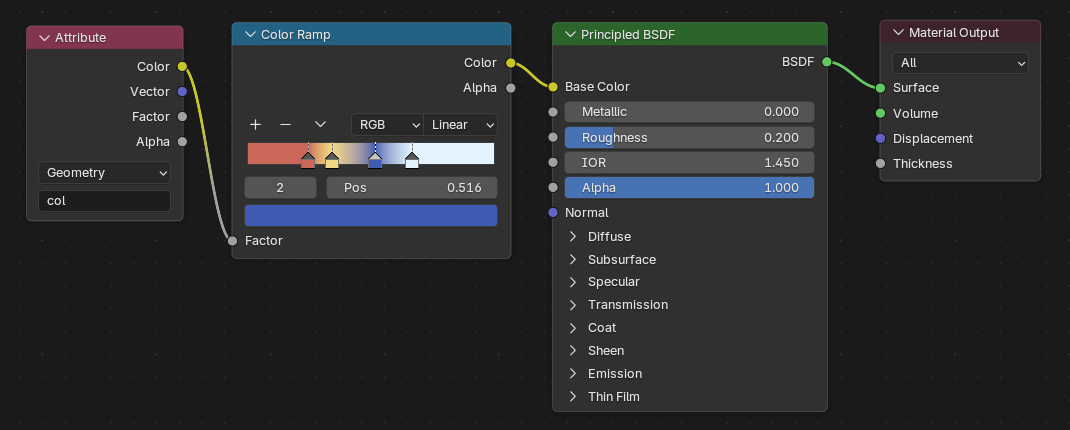
Shader nodes
Rendering
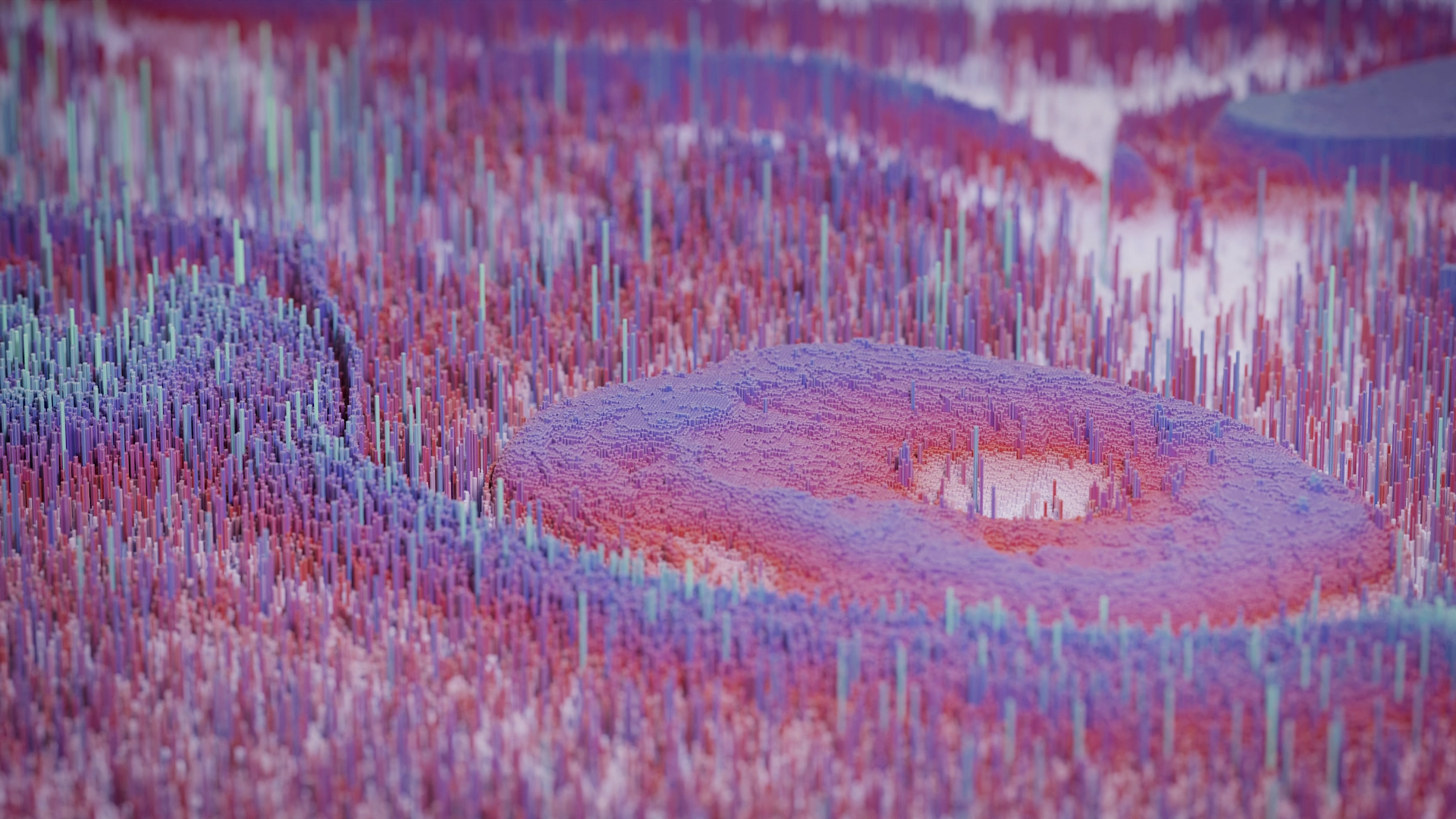
Finally, I positioned a camera with a shallow depth of field and explored the landscape for interesting compositions. Once I was satisfied with the framing, I rendered the scene and applied the final colour‑grading.



Credits
Music by Samuel F. Johanns from Pixabay